
PC Elements Defined: Every thing You Must Construct a Gaming PC (2026 Information)
Final Up to date: Might 2026
Constructing your personal gaming PC is likely one of the greatest methods to get most efficiency to your cash — and it’s extra accessible than ever in 2026. However earlier than you begin shopping for components, it’s essential to perceive what every element does and why it issues. This information explains each element wanted to construct a gaming PC, what to search for, and the way they work collectively.
Why Construct As an alternative of Purchase Prebuilt?
Constructing your personal PC sometimes saves $100–200 in comparison with a prebuilt on the similar efficiency stage. You management each element alternative, know precisely what’s inside, and may improve particular person components later. The construct course of itself takes 3–5 hours and is well-documented — YouTube has detailed tutorials for each step.
The one benefit of prebuilt is comfort and a single guarantee. When you’re not comfy constructing, prebuilt choices from CyberpowerPC and SkyTech are affordable alternate options, however you pay a premium for that comfort.
The Important Elements
1. CPU (Central Processing Unit) — The Mind
The CPU handles all the sport logic, AI, physics calculations, and background processes. It straight determines how briskly your PC processes directions. For gaming, single-core efficiency (how briskly one core runs) issues greater than core rely — most video games can’t effectively use greater than 8–12 cores.
In 2026 the beneficial gaming CPUs are:
- Finances: Intel Core i5-14400F (~$165) or AMD Ryzen 5 7600 (~$170)
- Mid-range: AMD Ryzen 5 9600X (~$195)
- Excessive-end gaming: AMD Ryzen 7 9800X3D (~$400–450)
The CPU should be appropriate along with your motherboard’s socket sort — confirm compatibility earlier than buying. For extra element see our Intel Gaming PC Construct and AMD Gaming PC Construct guides.
2. Motherboard — The Basis
The motherboard is the principle circuit board that connects all parts. It determines which CPUs you should utilize (socket compatibility), how a lot and what sort of RAM is supported, what number of storage drives you may join, and what enlargement playing cards match.
Key issues to verify:
- Socket — should match your CPU (AM5 for Ryzen 9000, LGA1700 for Intel twelfth–14th gen)
- Chipset — B-series (price range, no overclocking) or X-series (premium, full overclocking)
- RAM sort — DDR5 for AM5 and LGA1700 platforms; DDR4 for older platforms
- Type issue — ATX (full dimension), mATX (compact), or ITX (smallest)
Advisable manufacturers: ASUS, MSI, Gigabyte, ASRock. Finances vary: $100–200 for a strong gaming motherboard.
3. RAM (Random Entry Reminiscence) — Quick-Time period Reminiscence
RAM is your PC’s short-term working reminiscence. Video games load belongings, textures, and knowledge into RAM for immediate CPU entry. When RAM fills up the PC makes use of the SSD as overflow — which is dramatically slower and causes stuttering.
In 2026:
- Minimal: 16GB DDR5
- Advisable: 32GB DDR5
- Sort: DDR5 for brand spanking new AM5 and LGA1700 builds; DDR4 for older platforms
- Velocity: DDR5-6000 for AMD AM5, DDR5-5600 for Intel LGA1700
At all times set up RAM in matched pairs (2 sticks) within the appropriate dual-channel slots — verify your motherboard guide for which slots to make use of. For extra element see our RAM information.
4. GPU (Graphics Processing Unit) — The Gaming Engine
The GPU is a very powerful element for gaming efficiency. It renders each body you see on display — processing tens of millions of polygons, textures, and lighting calculations per second. GPU efficiency determines what decision you may sport at, what body price you obtain, and what graphics settings are doable.
In 2026 the GPU candy spots are:
- Finances 1080p: Intel Arc B580 (~$200) or AMD RX 9060 XT (~$300–350)
- Mid-range 1440p: AMD RX 9070 (~$450) or NVIDIA RTX 5060 Ti (~$400)
- Excessive-end: AMD RX 9070 XT (~$550) or NVIDIA RTX 5070 (~$600)
The GPU is the place it’s best to spend the biggest portion of your gaming PC price range. For an entire breakdown see our greatest graphics playing cards information.
5. Storage — NVMe SSD
In 2026 an NVMe M.2 SSD is the one storage sort price shopping for for a brand new gaming PC construct. It’s dramatically sooner than each SATA SSDs and conventional laborious drives — delivering sooner sport loading, sooner Home windows boot occasions, and help for DirectStorage sport asset streaming.
- Minimal: 1TB NVMe PCIe 4.0 SSD
- Advisable: 2TB NVMe PCIe 4.0 SSD
- Prime picks: Samsung 990 Professional, WD Black SN850X, Essential P3 Plus (price range)
Conventional HDDs are nonetheless helpful as secondary storage for archiving video games not at present being performed — 2–4TB HDDs value $50–80 and supply low-cost bulk storage alongside a quick NVMe main drive. For extra element see our greatest SSDs information.
6. PSU (Energy Provide Unit) — The Energy Supply
The PSU converts wall energy to the DC voltages your parts want. An undersized or low-quality PSU causes crashes, instability, and in excessive circumstances can harm parts.
Key issues to verify:
- Wattage — match to your GPU’s energy necessities. For mid-range builds (RTX 5060 Ti/RX 9060 XT) a 650W PSU is enough. For prime-end builds (RX 9070 XT/RTX 5070+) intention for 750–850W.
- Effectivity ranking — 80+ Bronze minimal, 80+ Gold beneficial for effectivity and element longevity
- Modular vs non-modular — modular PSUs solely embody cables you want, considerably bettering cable administration
- Model — Corsair, Seasonic, and EVGA are dependable manufacturers. Don’t low-cost out on the PSU.
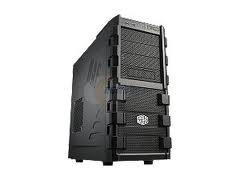
7. PC Case — The Housing
The case homes all of your parts and determines airflow high quality, construct issue, and aesthetics. Key issues:
- Type issue — should help your motherboard dimension (ATX, mATX, or ITX)
- Airflow — search for mesh entrance panels and good fan mount positions
- GPU clearance — verify most GPU size vs your GPU’s bodily size
- CPU cooler clearance — verify most CPU cooler top
- Cable administration — good circumstances have routing channels behind the motherboard tray
Prime mid-tower picks in 2026: Fractal Design Pop Air (~$90), Lian Li Lancool 216 (~$100), Corsair 4000D Airflow (~$100). For extra element see our PC case information.
8. CPU Cooler — Protecting Temperatures in Verify
Each CPU wants a cooler to dissipate warmth. Some CPUs embody a inventory cooler within the field — sufficient for primary operation however an aftermarket cooler considerably lowers temperatures and noise.
Choices:
- Inventory cooler — included with some CPUs. Ample however loud and restricted
- Finances air cooler — Arctic Freezer 36 (~$30) — vital enchancment over inventory
- Mid-range air cooler — Thermalright Peerless Murderer 120 SE (~$38) — wonderful worth, handles most gaming CPUs comfortably
- AIO liquid cooler — 240mm or 360mm radiator for high-TDP CPUs or aesthetics desire
For extra element see our greatest CPU coolers information.
9. Working System
Home windows 11 House is the usual gaming OS in 2026. Most video games are developed and optimized for Home windows first. Price is roughly $100–120 for a retail license.
Alternate options: Home windows 10 (Microsoft ends help October 2025 — not beneficial for brand spanking new builds), Linux gaming through Steam Proton (free, wonderful compatibility for a lot of video games however some titles don’t work).
Elective however Advisable Elements
Case followers — most circumstances include 1–2 followers. Including 2–3 further 120mm or 140mm followers ($10–20 every) considerably improves airflow and temperatures.
WiFi card — in case your motherboard doesn’t have built-in WiFi (most mid-range and above boards do) a PCIe WiFi card provides wi-fi connectivity. Price: $20–50.
Sound card / DAC — most fashionable motherboards embody good onboard audio. A devoted sound card is simply wanted for high-impedance headphones or particular audio setups. See our Do I Want a Sound Card information.
Optical drive — not wanted in 2026. All video games and software program can be found digitally or through USB.
What You Don’t Want Contained in the PC
A standard query from first-time builders — some older guides advocate parts which can be now not needed:
Sound card — onboard audio on fashionable motherboards is great for gaming headsets. See our sound card information.
Optical drive — fully non-obligatory. Bodily media is basically out of date.
HDD as main drive — HDDs are nonetheless helpful as secondary storage however ought to by no means be a main gaming drive in 2026. NVMe SSDs are dramatically sooner.
Devoted community card — all fashionable motherboards embody gigabit ethernet onboard. A devoted community card is pointless for gaming.
Whole Finances Breakdown
| Part | Finances Construct | Mid-Vary Construct |
|---|---|---|
| CPU | i5-14400F ~$165 | Ryzen 5 9600X ~$195 |
| Motherboard | B760M ~$110 | B650M ~$120 |
| RAM | 16GB DDR5 ~$50 | 32GB DDR5 ~$90 |
| GPU | RX 9060 XT ~$330 | RX 9070 ~$450 |
| Storage | 1TB NVMe ~$70 | 2TB NVMe ~$120 |
| Case | ~$80 | ~$100 |
| PSU | 650W ~$70 | 750W ~$90 |
| CPU Cooler | ~$35 | ~$40 |
| Whole | ~$910 | ~$1,205 |
The place to Purchase Elements
Amazon — handy, quick transport, good return coverage. Costs fluctuate incessantly.
Newegg — specialist PC element retailer with good choice and frequent gross sales.
PCPartPicker.com — not a retailer however an important device. Enter your parts and it checks compatibility, finds the perfect present costs throughout retailers, and flags potential points. Use it earlier than shopping for something.
Microcenter — bodily shops with wonderful costs and in-store experience. Solely out there in choose US cities however price visiting if in case you have one close by.
Often Requested Questions
Is constructing a PC tough?
Not with fashionable instruments and assets. Fashionable circumstances have tool-free element set up, PCPartPicker checks compatibility routinely, and YouTube has step-by-step construct guides for each case and element mixture. Most first-time builders full their construct in 3–5 hours.
What order do I assemble PC parts?
Normal order: set up CPU on motherboard → set up RAM → set up CPU cooler → set up M.2 SSD → mount motherboard in case → set up PSU → set up GPU → join all cables → boot and set up Home windows.
Do I want thermal paste?
Thermal paste fills microscopic gaps between the CPU and cooler for environment friendly warmth switch. Most aftermarket CPU coolers embody thermal paste pre-applied or in a syringe. In case your cooler doesn’t embody it, Arctic MX-6 (~$8) is the usual advice.
Can I reuse parts from my previous PC?
Doubtlessly — storage drives, GPU, PSU, and case can typically be reused if appropriate. CPU and RAM sometimes can’t be reused throughout platform generations because of socket and reminiscence sort adjustments.