
E-cars: what are they, when would possibly they arrive, and will they be the way forward for EVs?
World governments hoping to drastically minimize emissions within the subsequent decade all need us to kick our combustion vehicles to the kerb, however not everybody has the funds to swap their present wheels for electrical automobile – however what if there was a brand new class of small, budget-friendly EVs extra of us might afford?
That’s the pondering behind the European Fee’s newest work-in-progress initiative, which might see automotive makers incentivised for constructing E-cars. However what type will they take, what guidelines will they need to comply with – and the place will you be capable to drive them? Right here’s every thing we all know to date.
What are E-cars?
Proper now, no-one actually is aware of. EU Fee President Ursula von der Leyen introduced a “small reasonably priced automotive initiative” in her 2025 State of the Union speech, with the twin goal of decreasing the barrier to entry for patrons and decreasing the quantity of polluting combustion vehicles on Europe’s roads, however it was quick on specifics.
Dimension and efficiency restrictions are very possible, however neither has been locked down but. The automotive business thinks they’ll be nearer to Japan’s Kei class than France’s voiture sans permis quadricycles, which could be pushed by 14-year-olds with a easy highway security certificates.
They’ll be cheaper than even probably the most fundamental EVs on sale proper now, primarily as a result of they’ll be allowed to skip the costly driver help methods which are legally mandated on all new vehicles as we speak. Estimates vary from €15,000 to €20,000. Smaller battery capacities and a deal with shorter journeys – which make up nearly all of journeys by European automotive house owners – would be the primary methods to chop prices.
Automotive makers should additionally construct them in Europe, and match European-made batteries.
What’s in it for the automotive makers?
Whereas large battery EVs proceed to get costlier and head additional into luxurious territory, the common European automotive purchaser is simply keen to spend €20,000 on a brand new electrical automobile. The E-car class would enable producers to make way more reasonably priced fashions, tapping a buyer base that’s largely solely serious about shopping for second-hand as we speak.
The European Union might additionally supply incentives, like subsidising battery manufacturing and offering credit to assist producers hit their fleet common CO2 targets – which can get progressively more durable in the direction of the (since watered-down) 2035 deadline in the event that they proceed to promote combustion vehicles. Emissions throughout all vehicles bought need to drop by 90% in comparison with 2021’s figures, and never complying will end in fines.
As soon as laws have been confirmed they’ll be set in stone for at least ten years, so automotive makers aren’t pressured to make sweeping adjustments to their designs or manufacturing centres..
When might the primary E-cars arrive?
Don’t count on a swathe of low-cost, small EVs to seem at your native dealership in a single day. As soon as the laws have been locked in, automotive producers will want a minimum of a few rears to design and manufacture fashions that meet them – assuming they’re dramatically totally different from the principles protecting present vehicles.
There’s a risk the smallest, most reasonably priced EVs on sale as we speak could possibly be tailored – suppose the cheap-as-chips Dacia Spring and Kei car-inspired Honda Tremendous-N – however provided that manufacturing is moved to inside Europe.
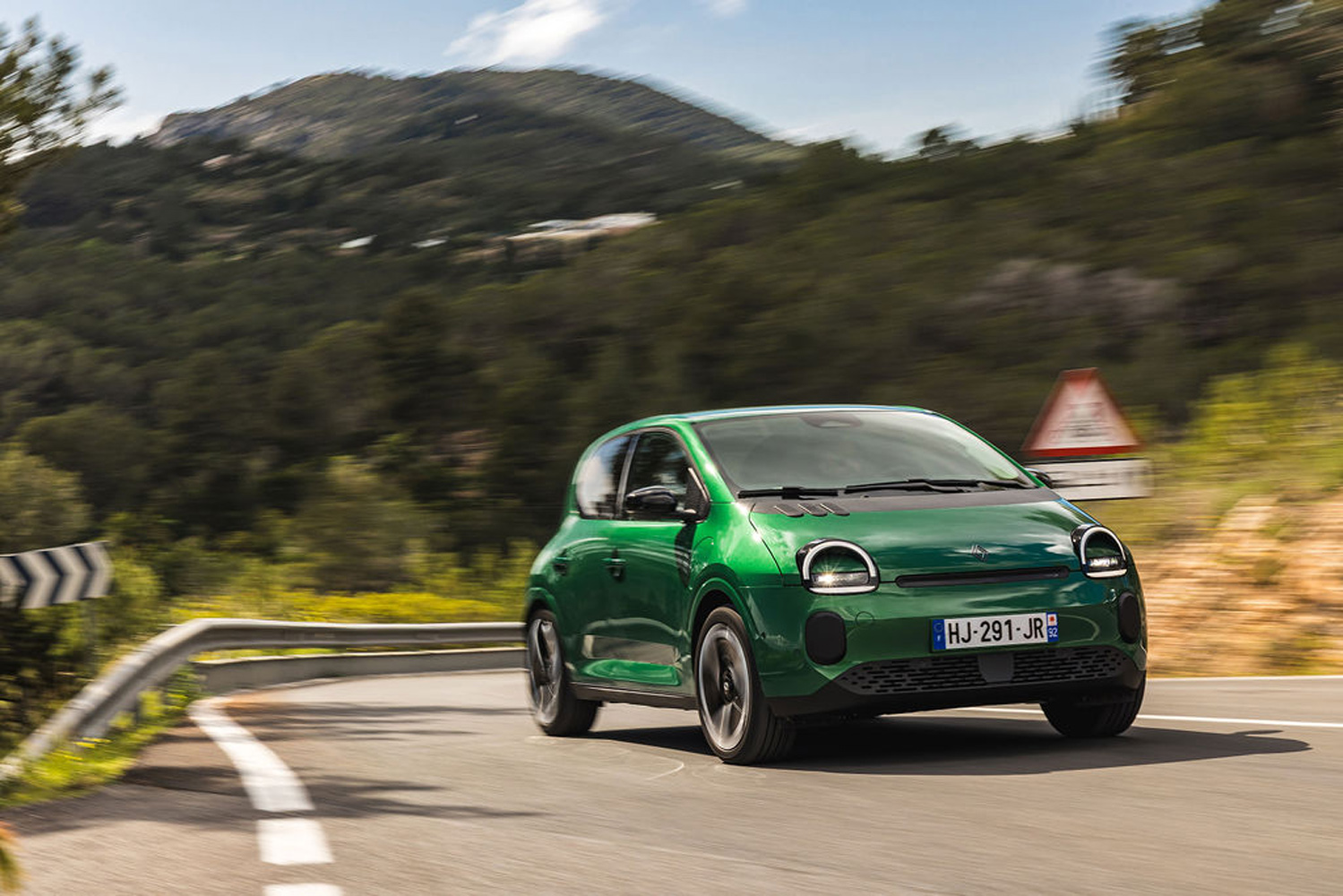
Extra possible are variants of the retro-tastic Fiat 500, upcoming Volkswagen ID Polo and reborn Renault Twingo, that are already small and reasonably priced. Decreasing battery capability and eradicating ADAS could possibly be sufficient to qualify below the proposed guidelines. Both approach, it’s unlikely the E-car class may have something to indicate for itself till 2028 on the earliest.
Which nations might get E-cars?
As a European Fee initiative, Europe would be the E-car’s pure stomping floor. Whether or not that’ll imply all EU nations or simply those which have extra readily adopted EVs already stays to be seen.
The UK might miss out as a result of now that it has left the European Union, vehicles bought and produced right here wouldn’t earn credit or contribute to a producer’s emissions objectives. The federal government might agree an identical set of legal guidelines in an effort to change that, although.
It’s virtually a certainty that the USA gained’t see any of those new fashions – the small dimension and restricted vary would make them deeply impractical for American roads and common journey distances. They’d even be dwarfed by SUVs and pick-up vehicles, which might make it subsequent to unimaginable to go security requirements.
