
What’s It & How Does it Affect Avid gamers?
Want a fast primer on anti-aliasing? This information explains what it does, how immediately’s choices differ, and which settings to strive in your video games.
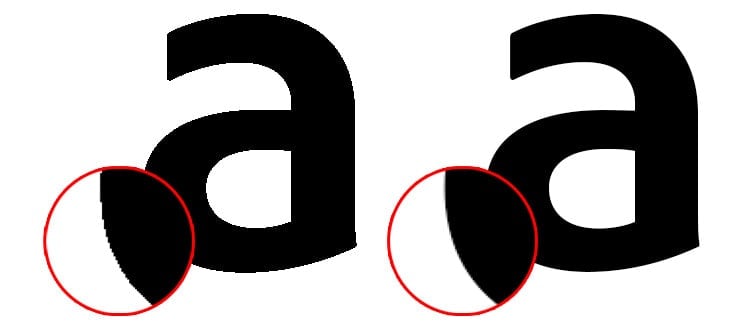
If you’ve ever noticed stair-stepped edges on a constructing or watched a distant fence shimmer as you moved, you’ve seen aliasing. Anti-aliasing, typically shortened to AA, helps cut back these distractions.
In 2026, selecting an AA setting can even imply selecting how a sport reconstructs its picture. Alongside acquainted choices like MSAA and TAA, you might even see DLAA, DLSS, FSR, XeSS, or TSR. Some prioritize picture high quality at native decision; others mix anti-aliasing with upscaling to enhance efficiency.
The fast suggestion: Begin with the sport’s default. If efficiency is nice, evaluate its native-resolution AA choices. Should you want extra frames per second, strive a supported temporal upscaler’s High quality mode. Choose each whereas shifting, as a result of a clear screenshot doesn’t inform the entire story.
What Is Anti-Aliasing?
Anti-aliasing reduces visible errors that seem when a sport turns detailed geometry, textures, and lighting right into a finite grid of pixels.
The simplest instance is a diagonal line. A pixel grid can’t signify each potential angle completely, so the road can appear like a staircase. These jagged edges are sometimes referred to as “jaggies.”

Aliasing additionally exhibits up in movement. Skinny wires, grass, fences, and brilliant highlights can flicker or appear to crawl because the digicam strikes. This is the reason anti-aliasing nonetheless issues on fashionable gaming screens, even when particular person pixels are troublesome to see.
How Does Anti-Aliasing Work?
Totally different strategies collect and mix picture data in numerous methods. Some take additional samples inside a body. Others detect edges in an already-rendered picture. Temporal strategies additionally use data from earlier frames.

The aim is a smoother, extra steady image. The tradeoffs can embody decrease body charges, softer element, or movement artifacts. Anti-aliasing isn’t merely a blur filter, though some implementations could make a picture look blurry.
The Essential Kinds of Anti-Aliasing
Supersample Anti-Aliasing (SSAA)
SSAA takes additional samples throughout the picture. A typical strategy renders at the next decision after which downsamples to your show’s decision. For instance, rendering at 3840 × 2160 for a 1920 × 1080 output includes 4 occasions as many pixels.
It could actually produce glorious outcomes, however that additional rendering work is pricey. Think about it for older or much less demanding video games when you may have GPU efficiency to spare. It isn’t an automated best option for each fashionable sport.
Multisample Anti-Aliasing (MSAA)
MSAA samples polygon protection at a number of places inside a pixel with out repeating all shading work for each pattern. Choices resembling 2x, 4x, and 8x describe the pattern rely; larger settings typically price extra efficiency.
It could actually clean geometry edges whereas maintaining the picture crisp, however doesn’t clear up each supply of aliasing, together with many shader and texture particulars. The SMAA analysis paper explains the sampling and efficiency variations between SSAA and MSAA.
Quick Approximate Anti-Aliasing (FXAA)
FXAA detects and smooths edges within the rendered picture. It’s often cheap and price attempting when efficiency is tight, however it may possibly soften nice particulars. Its precise efficiency price depends upon the sport, GPU, and backbone.
Subpixel Morphological Anti-Aliasing (SMAA)
SMAA makes use of edge detection and sample evaluation to clean jaggies whereas preserving sharp options. Primary SMAA 1x is a helpful possibility to match with FXAA when you want a crisper image, but it surely received’t get rid of all flickering in movement. There are additionally SMAA variants that incorporate further samples or temporal data, so the precise implementation issues. The developers’ SMAA overview describes these variations.
Temporal Anti-Aliasing (TAA)
TAA combines current-frame data with samples from earlier frames, utilizing movement data to assist align them. It could actually cut back shimmering on nice particulars that single-frame strategies wrestle with.
The draw back is that mismatched historical past can produce ghosting, softness, or smearing round shifting objects. Outcomes range considerably between video games. Intel’s XeSS developer information explains these temporal reconstruction challenges.
TAA isn’t the identical factor as TXAA. NVIDIA’s older TXAA combines MSAA, post-processing, and temporal filtering. Common TAA doesn’t require a specific GPU model.
DLAA and Native AA Modes
NVIDIA’s Deep Studying Anti-Aliasing, or DLAA, makes use of expertise developed for DLSS on a native-resolution picture. It targets picture high quality slightly than the efficiency positive factors of rendering at a decrease decision. It’s an possibility for suitable GeForce RTX {hardware} in supported video games. See NVIDIA’s rationalization of DLAA.
Different reconstruction methods supply native-resolution modes, too. AMD launched Native AA with FSR 3, and XeSS features a Native Anti-Aliasing preset. Availability depends upon the sport’s integration and your {hardware}.
These are price evaluating while you’re completely happy together with your body fee and need cleaner edges. Native AA nonetheless has a processing price, and it isn’t assured to look higher than each different setting.
What About CSAA and EQAA?
NVIDIA’s CSAA and AMD’s EQAA are older approaches that separate protection sampling from different pattern knowledge to scale back prices relative to comparable MSAA configurations. They’re primarily related when older video games and {hardware}, slightly than a helpful start line for selecting settings in 2026. The SMAA paper additionally discusses their relationship to MSAA.
How DLSS, FSR, XeSS, and TSR Match In
Temporal upscalers reconstruct an output picture utilizing a lower-resolution enter and data from earlier frames. Additionally they deal with anti-aliasing, so enabling one often replaces the sport’s common TAA stage slightly than including a separate impact on high.
Examples embody DLSS Tremendous Decision, temporal variations of FSR, XeSS Tremendous Decision, and Unreal Engine’s Temporal Tremendous Decision (TSR). AMD particularly paperwork that FSR 2 replaces TAA, whereas Epic explains how TSR combines reconstruction with anti-aliasing.
Model names matter. FSR 1 is a spatial upscaler and doesn’t carry out the identical temporal reconstruction as later FSR implementations. Likewise, a sport’s bundled model and supported {hardware} can have an effect on which options can be found. Don’t assume each possibility beneath the identical model works identically.
These applied sciences proceed to evolve. For instance, DLSS 4.5 launched a second-generation transformer mannequin in 2026. For selecting settings, nonetheless, the helpful distinction stays the identical: native AA prioritizes high quality with out decreasing enter decision; upscaling modes commerce enter decision for potential efficiency positive factors.
High quality mode is a wise first setting to check. Balanced and Efficiency modes typically use fewer enter pixels, which may enhance pace however make nice particulars tougher to reconstruct. Preset names and scaling ratios aren’t an identical throughout each expertise.
Body technology is a separate function. It creates further displayed frames to enhance obvious smoothness. It isn’t an anti-aliasing methodology, and its larger displayed body fee doesn’t imply the sport is rendering new input-responsive frames at that very same fee. NVIDIA separates these features in its DLSS expertise overview.
Which Anti-Aliasing Setting Ought to You Use?
Your best option depends upon the sport, your graphics card, your decision, and the way a lot softness or shimmering bothers you. Use these as beginning factors for comparability:
| Your precedence | What to strive | What to test |
|---|---|---|
| Picture high quality with efficiency to spare | DLAA or one other native AA mode, in contrast with the sport’s default | Effective element, ghosting, and body fee |
| Extra efficiency in a demanding sport | A supported temporal upscaler in High quality mode | Shifting foliage, skinny wires, and distant objects |
| A crisp picture in a sport providing MSAA | 2x or 4x MSAA | Efficiency price and remaining shimmer |
| A light-weight various | SMAA or FXAA, if out there | Softness versus seen jaggies |
| Aggressive play | Evaluate the default with a lighter out there AA setting | Goal visibility, responsiveness, and constant body occasions |
To make the comparability helpful, stand in the identical location and transfer the digicam alongside the identical path. Have a look at fences, vegetation, hair, and brilliant edges. Look ahead to shimmering, trails behind objects, and particulars that disappear throughout motion.
Change one setting at a time. If the image appears gentle, evaluate the next enter decision or one other AA methodology earlier than turning sharpening all the way in which up. Sharpening can emphasize edges, however it may possibly’t reliably restore lacking element and might introduce halos.

Do You Nonetheless Want Anti-Aliasing at 1440p or 4K?
Usually, sure. A better decision could make jagged edges much less apparent, but it surely doesn’t get rid of aliasing in skinny geometry, detailed supplies, or shifting highlights.
Display screen dimension and viewing distance matter, too. On the identical decision and viewing distance, a bigger display screen makes particular person pixels simpler to see. A 4K show isn’t routinely denser than each lower-resolution show; it’s important to take into account its bodily dimension.
Additionally distinguish output decision from rendering decision. A sport outputting 4K with an upscaler could render internally at a a lot decrease decision. Choosing 4K within the menu doesn’t essentially imply each body begins as a local 4K picture.
Ought to You Flip Anti-Aliasing Off?
If the sport provides the choice, it’s affordable to match it. You could want the sharper look or acquire some efficiency. You may additionally discover that flickering edges and unstable nice element are extra distracting than the softness you eliminated.
Anti-aliasing stays an vital a part of gaming graphics in 2026. Decide the choice that retains the picture clear throughout precise play and delivers the body fee you need. When you’ve discovered that stability, get again to having fun with the sport.