
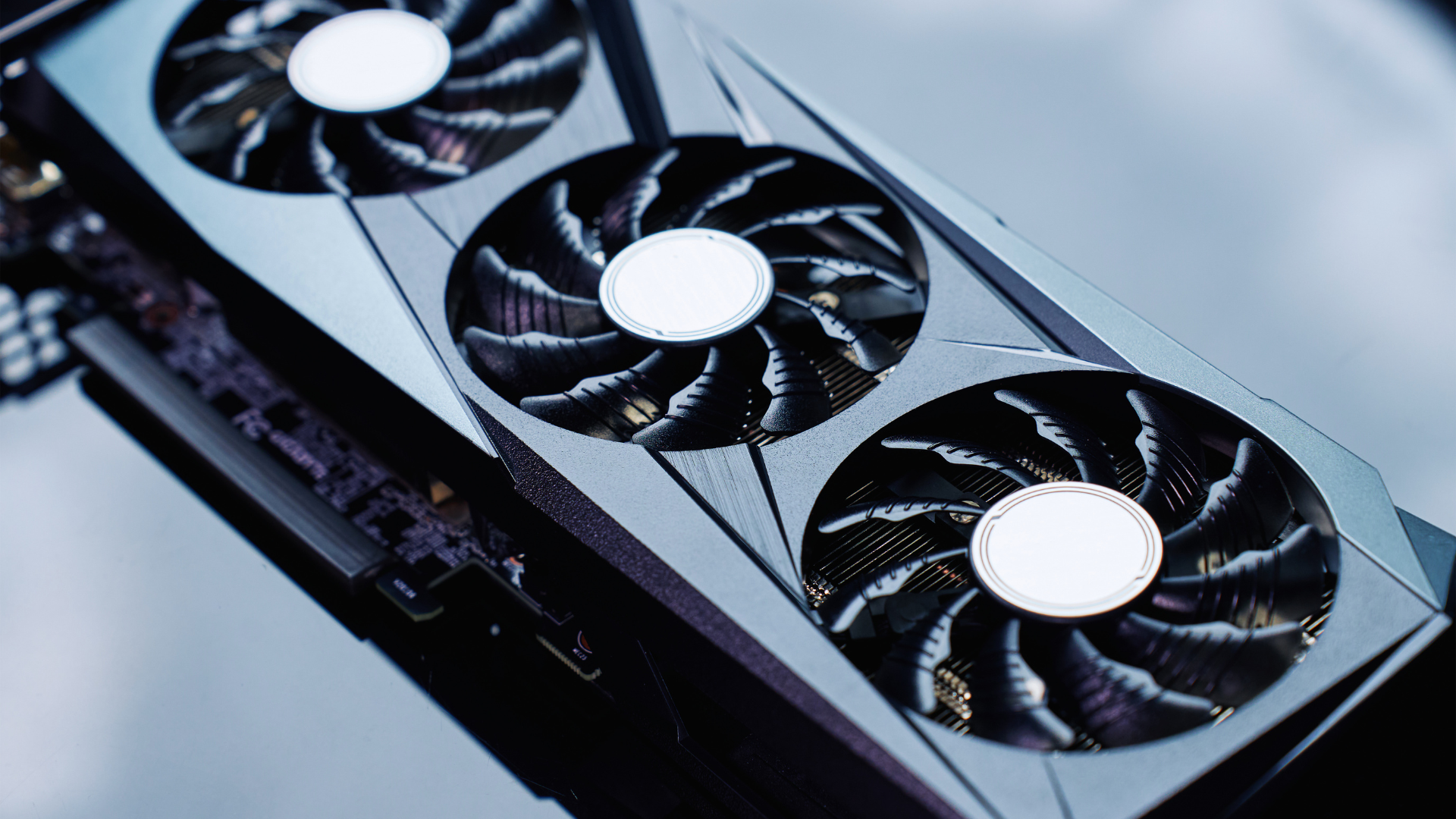
Why Dwell Video Stutters on a Quick Gaming PC, and Tips on how to Repair It
NVIDIA’s video decode assist matrix has a row for the GeForce RTX 2080 Ti, the highest card within the GeForce RTX 20 collection, and each of its AV1 columns learn NO. The row for the RTX 3050, the lowest-numbered desktop card of the era that adopted, reads YES in each.
That hole explains a grievance that sounds backwards. A PC that runs new video games at excessive body charges can nonetheless drop frames on a reside stream in a browser tab as a result of video depends on completely different components of the machine than video games do.
What determines a clean reside image is a brief chain: the decoder on the graphics card, the route the browser opens to it, the monitor’s refresh charge, the community hyperlink, and no matter else is competing for a similar {hardware}. The checks under comply with that chain, from free settings to the one improve that’s generally value paying for.
Gaming Pace Doesn’t Resolve Which Codecs a Card Can Decode
Microsoft’s DirectX staff describes a GPU as a set of engines: unbiased models of silicon that may run in parallel. Video games load the 3D engine, however video can bypass it. The staff notes that enjoying a video might not use the 3D engine in any respect in some circumstances and {that a} driver can hand a clip to a devoted video decode engine.
Every decode engine helps a particular set of codecs, which the distributors publish. H.264 is near common: each GeForce in NVIDIA’s matrix that has a decoder, going again to the Maxwell era, handles it. VP9 is patchier. The GTX 950 and 960 decode it in {hardware}, whereas the higher-numbered GTX 970, 980, and 980 Ti from the identical Maxwell household don’t.
AV1, the most recent of the three codecs, largely splits playing cards by era, with one awkward exception from AMD:
| Card or graphics | Household | AV1 {hardware} decode | Listed by |
| GeForce GTX 1660 Tremendous | Turing | No | NVIDIA decode matrix |
| GeForce RTX 2080 Ti | Turing | No | NVIDIA decode matrix |
| GeForce RTX 3050 | Ampere | Sure | NVIDIA decode matrix |
| Radeon RX 6500 XT | Radeon RX 6000 | No | AMD spec web page |
| Radeon RX 6600 | Radeon RX 6000 | Sure | AMD spec web page |
| Intel UHD Graphics 630 | ninth Gen Core | No | Intel media reference |
| Intel Iris Xe Graphics | eleventh Gen Core | Sure | Intel media reference |
| Intel Arc A-series | Arc discrete | Sure | Intel media reference |
On the NVIDIA facet, the road is clear: the matrix reveals AV1 decode on each GeForce RTX 30, 40, and 50 card it lists and on not one of the Turing playing cards. Mozilla’s listing regarded a lot the identical in Might 2022, when Firefox 100 switched on {hardware} AV1 decoding for Home windows with “Intel Gen 11+, AMD RDNA 2 Excluding Navi 24, GeForce 30” graphics. Its launch notes added that Home windows customers may also want Microsoft’s AV1 Video Extension from the Microsoft Retailer.
A card with out that block can nonetheless play AV1, however the browser decodes it in software program on the CPU, the place it competes for assets with a working recreation or a second stream in one other tab.
Browsers Fall Again to the CPU With out Telling You
{Hardware} decoding solely occurs when the browser agrees to make use of it, and peculiar occasions can cease that from taking place. One is a change any person flipped on goal. YouTube’s assist web page for a inexperienced video participant tells Chrome customers to open Settings, then Superior, then System, and switch {hardware} acceleration off. That’s a good repair for one glitch, however the change stays off afterward, and video in that browser continues to decode on the CPU till somebody remembers to show it again on.
Chrome can even decline to make use of {hardware} acceleration by itself. Chromium’s developer documentation says that when the about:gpu web page stories the GPU as disabled and {hardware} acceleration as unavailable, the GPU might merely be unsupported. A command-line flag can override Chrome’s GPU blocklist, however YouTube’s assist web page suggests a safer step: replace the graphics driver, which it says might right many of those issues.
Format selection provides one other layer. The W3C’s Media Capabilities specification lets a web site ask the browser, earlier than it picks a stream, whether or not a format will decode easily and power-efficiently on the machine. It additionally tells browsers to not mark {hardware} decoding as energy environment friendly by default as a result of software program codecs could be simply as environment friendly, significantly with low-resolution video. So, a small webcam feed decoded on the CPU isn’t the issue, whereas a 1440p stream at 60 frames per second asks the software program path to rebuild roughly eight occasions as many pixels every second as a 720p feed at 30 fps.
A Tab With No App Behind It Inherits All of This
These settings matter most for companies that exist solely in a browser tab. An put in app can ship with its personal participant, whereas an online web page will get no matter route the browser has to your decoder.
Video calls are the on a regular basis case. Chrome’s builders wrote that beginning with Chrome 113, any WebRTC app may use a a lot quicker AV1 encoder, and that Google Meet had examined AV1 on connections as sluggish as 40 kbps. Each AV1 body a name sends nonetheless needs to be decoded on the different finish by no matter GPU, or CPU, the opposite particular person’s browser can attain. On a GTX 1660, which means software program decoding.
Dwell-dealer tables are one other kind of stream folks run in a browser on a desktop PC: an actual supplier at an actual desk, streamed as every spherical performs out. A number of sweepstakes platforms don’t have any downloadable app in any respect and run completely within the browser, so on a PC, the tab itself is the participant.
The sweepstakes on line casino critiques at Authorized Sports activities Report observe that element platform by platform, noting whether or not a web site has a downloadable app or works within the browser and whether or not its foyer carries reside supplier video games. These platforms are for adults and are restricted in some states.
A 144 Hz Monitor Can’t Cut up a 60 fps Stream Evenly
Decoded frames then meet the monitor’s refresh clock, and a gaming monitor’s clock could be the incorrect one for reside video. RTINGS explains the ensuing judder utilizing movie on TVs. A 60 Hz set exhibiting 24 fps footage holds frames alternately for 2 refreshes and three refreshes, so some keep on display for 33 ms and others for 50 ms, making movement seem jerky. A 120 Hz panel avoids this as a result of 24 divides evenly into 120 5 occasions.
Run the identical calculation on a PC. One refresh at 144 Hz lasts 6.94 ms, and a 60 fps stream would wish 2.4 refreshes per body. A set-refresh show can’t present a fraction of a refresh, so out of each 5 frames, three are held for 2 refreshes (13.9 ms) and two are held for 3 (20.8 ms). A 30 fps stream lands at 4.8 refreshes per body, leading to a mixture of 4 and 5, whereas 165 Hz turns 60 fps into 2.75. Oddly, 144 Hz handles 24 fps movie evenly at six refreshes per body.
The unevenness is milder than a TV’s 33-to-50 ms judder, and RTINGS says most individuals gained’t discover judder in any respect. It’s most seen throughout movement that ought to look clean, reminiscent of a sluggish digital camera pan.
The reliable repair is free. Home windows lists each refresh charge the monitor gives underneath Settings, System, Show, Superior show. Choose 120 Hz or 240 Hz if the panel gives both, since each divide evenly by 30 and 60, and change again earlier than a gaming session if you need the additional frames.
Variable refresh charge feels like the higher reply as a result of G-Sync and FreeSync alter the monitor’s refresh charge on the fly to match the GPU’s body charge. Microsoft’s refresh-rate steering frames VRR round video games, although, noting that many in style titles use it mechanically. For a stream in a browser window, a set 120 Hz is the safer selection.
Wi-Fi 7 Wants the Proper Card and Home windows Construct to Ship
Dwell video cares about when packets arrive, not simply what number of arrive, and the Wi-Fi Alliance’s pitch for latest generations displays that. It credit Wi-Fi 6’s OFDMA with sharing channels effectively to decrease latency. It sells Wi-Fi 7, launched in 2024, on decrease latency and higher reliability, and it pitches the era after that on deterministic, low latency throughout a variety of sign situations. For now, a cable takes the radio connection out of the equation, and for a desktop inside attain of the router, it’s nonetheless the primary selection.
The newer commonplace’s function geared toward bettering consistency is multi-link operation, or MLO, which the Alliance says balances visitors throughout hyperlinks for greater throughput and higher reliability. Getting it on a Home windows PC takes greater than a brand new router. PCWorld reported in July 2025 that, in keeping with Microsoft, solely Home windows 11 model 24H2 and later formally assist Wi-Fi 7, and that Intel’s driver obtain for its BE200, BE201, and BE202 modules ties their Wi-Fi 7 options to that very same model.
On older Home windows 11 builds, PCWorld defined {that a} laptop computer with an Intel adapter connects to a Wi-Fi 7 router over 6 GHz at 160 MHz fairly than 320 MHz and may’t use MLO, leaving it behaving extra like Wi-Fi 6E. Home windows 10 doesn’t assist the usual in any respect. To verify a machine, run netsh wlan present drivers in a terminal. 802.11be, the usual’s formal identify, ought to seem underneath Supported Radio Sorts.
The Browser Already Counts Your Dropped Frames
Earlier than blaming any single element, let the browser report the place the frames went. For WebRTC streams reminiscent of calls, Chrome reveals reside statistics at chrome://webrtc-internals, and the web page captures essentially the most helpful data when it’s opened earlier than the session begins. The W3C’s WebRTC statistics specification defines what these counters imply.
The framesDropped counter tallies frames the receiving browser discarded, both earlier than decoding or as a result of they missed their show deadline. A second counter, freezeCount, logs a freeze at any time when the hole between two rendered frames reaches thrice the latest common body period or that common plus 150 ms, whichever is bigger. At 30 fps, that’s a niche of roughly 183 ms. Dividing totalDecodeTime by framesDecoded offers the common decode time per body, and as soon as that creeps towards the body interval — 16.7 ms at 60 fps — the decoder is working out of room.
Process Supervisor covers the remainder. It reveals 4 GPU engines by default, and Microsoft’s DirectX staff explains that any graph could be switched to a different engine, so choose Video Decode and begin the stream. Exercise there means the {hardware} decoder is working. A flat line whereas CPU utilization climbs factors to software program decoding, although the identical explainer warns {that a} driver might decode some codecs on the compute engine, so verify that graph as effectively.
Improve the Decoder Earlier than Something Greater
{Hardware} solely enters the image as soon as the free fixes are accomplished and the counters nonetheless level to the decoder.
The desk then makes the decision. A GTX 1660 Tremendous or an RTX 2080 Ti decodes H.264 and VP9 in {hardware} however leaves AV1 to the CPU. The RX 6500 XT, which AMD lists with H.264 decode, has no AV1 decoder both. For an H.264 stream, all three have already got the decoder they want.
The query to ask earlier than spending something is slim: Does the Video Decode graph transfer when the stream performs? If it does and frames nonetheless drop, the refresh charge and community connection are the following suspects. If it stays flat on a card marked No in that desk whereas an AV1 stream performs, the repair is a more recent decoder fairly than a quicker card. The RTX 3050 and RX 6600 rows present that it doesn’t take a high-end card to get one.