
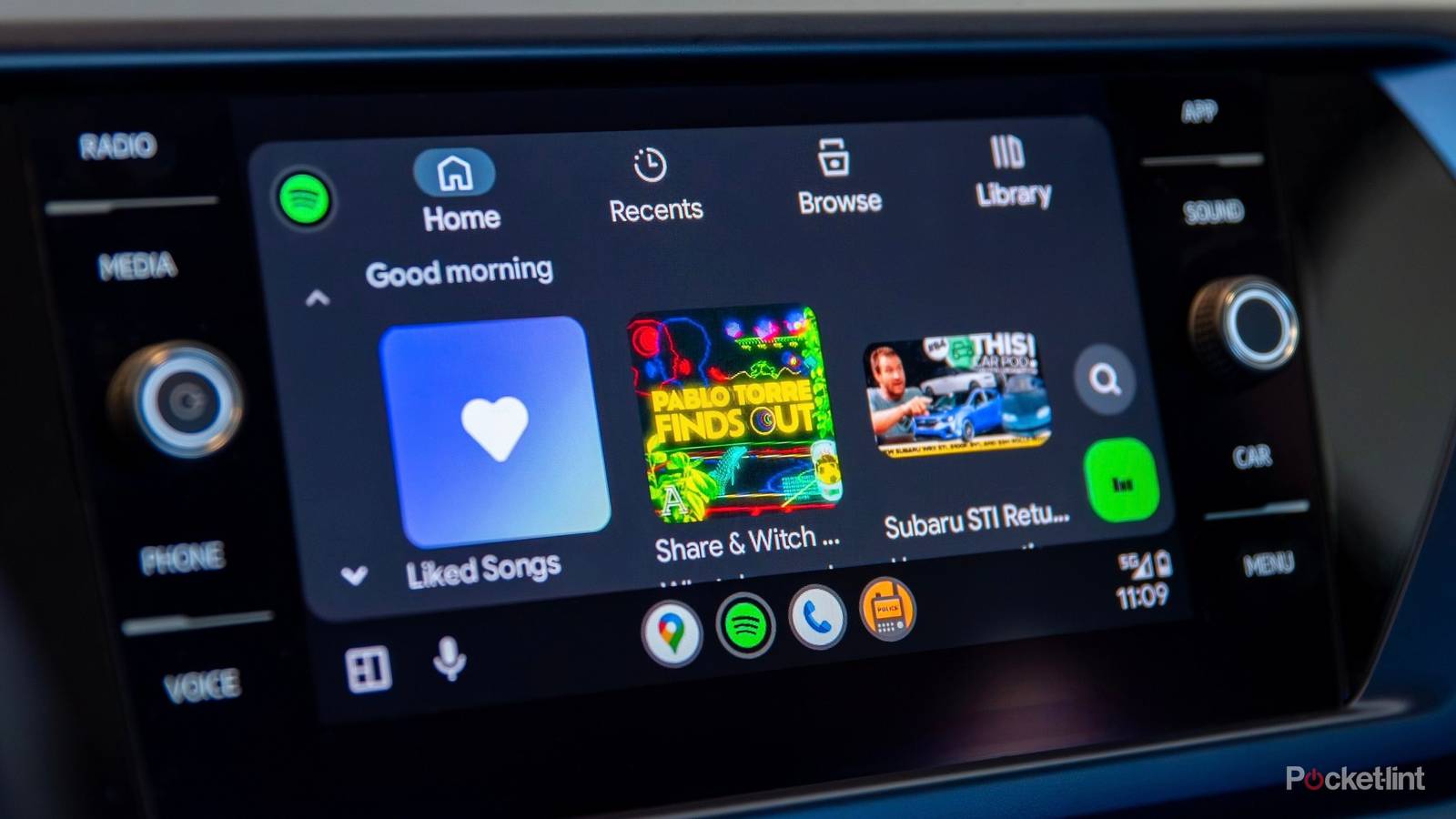
Why among the phrase’s most well-known automotive manufacturers do not assist Apple CarPlay or Android Auto
In the event you’ve been automotive procuring previously few years, you would possibly’ve been stunned to be taught that among the best-known manufacturers do not assist Apple CarPlay or Android Auto. Actually, GM is actively stripping these platforms out of its autos, with the objective of transitioning to a brand new proprietary system by 2028. That transfer might sound backwards, provided that your cellphone nonetheless tends to be extra highly effective and simpler to make use of than many sprint techniques.
There may be an underlying logic to those omissions. And sadly, it is usually not in your pursuits, however fairly milking each final dime from clients.
- Model
-
Google
- SoC
-
Google Tensor G6
Why some automakers skip CarPlay and Android Auto
You’re the product

In some circumstances — notably with superior EVs like Teslas and Rivians — sticking to a proprietary interface can assist particular capabilities, or eradicating bodily buttons and knobs. The usual variations of CarPlay and Android Auto do not embody any manner of adjusting air con, a lot much less issues like customized traction management modes. For these types of options, automakers need to step as much as CarPlay Extremely or Android Automotive, and Extremely is simply over a 12 months outdated at this level.
In all different conditions although, the choice boils down to 1 factor: possession. Some automakers insist on an interface that matches a selected model aesthetic. They might additionally need entry to your telemetry knowledge, by which I imply issues like routing habits, or how usually apps are used. Once you load up CarPlay or Android Auto, it is solely app builders and Apple or Google which have any entry to this, which could frustrate an automaker’s plans for testing future merchandise.
On prime of that, cellphone platforms can create bottlenecks. Labor and different sources need to be invested into making certain compatibility, and Apple and Google could not all the time be working on a handy improvement timeline. I have not heard of this creating any critical hurdles, to be clear — however there’s apparent freedom in having the ability to focus by yourself software program, irrespective of if further work must be carried out to assist options like navigation, voice instructions, or AI.
Essentially the most insidious incentive for elevated possession is monetization. Fortunately, promoting your knowledge to third-party brokers has confirmed much less profitable than utilizing it internally (in line with Hagerty), however it does nonetheless occur. And if drivers are depending on first-party software program, it is simpler to market what are euphemistically labeled options on demand (FoD), a.okay.a. subscriptions. In the event you can flip to your cellphone, there is no have to pay an automaker for issues like streaming providers, built-in 5G, or safety digicam recordings. Subscription earnings are a better manner of appeasing traders than a success new mannequin or bettering manufacturing effectivity.
Are CarPlay and Android Auto dying?
Do not panic but

Whereas I haven’t got a crystal ball, this appears unlikely. Each CarPlay and Android Auto are extraordinarily widespread with drivers, to the purpose that they are often vital characteristic. In addition they proceed to have backing from main manufacturers like Hyundai and Nissan, and I doubt that Apple or Google would give up their business footprint and not using a combat. They’re trillion-dollar megacorporations, to allow them to throw some huge cash at present or future companions.
If there is a danger, it is largely in whether or not the transition to Tesla-style techniques will step by step render CarPlay and Android Auto irrelevant. I am nonetheless uncertain. Extremely and Android Automotive are adaptable, and even Tesla has reportedly been collaborating with Apple on some type of CarPlay assist. GM is definitely constructing on prime of Android Automotive — it simply does not need you projecting apps out of your cellphone. If you wish to ship a message, be very choosy concerning the subsequent car you purchase or lease.