
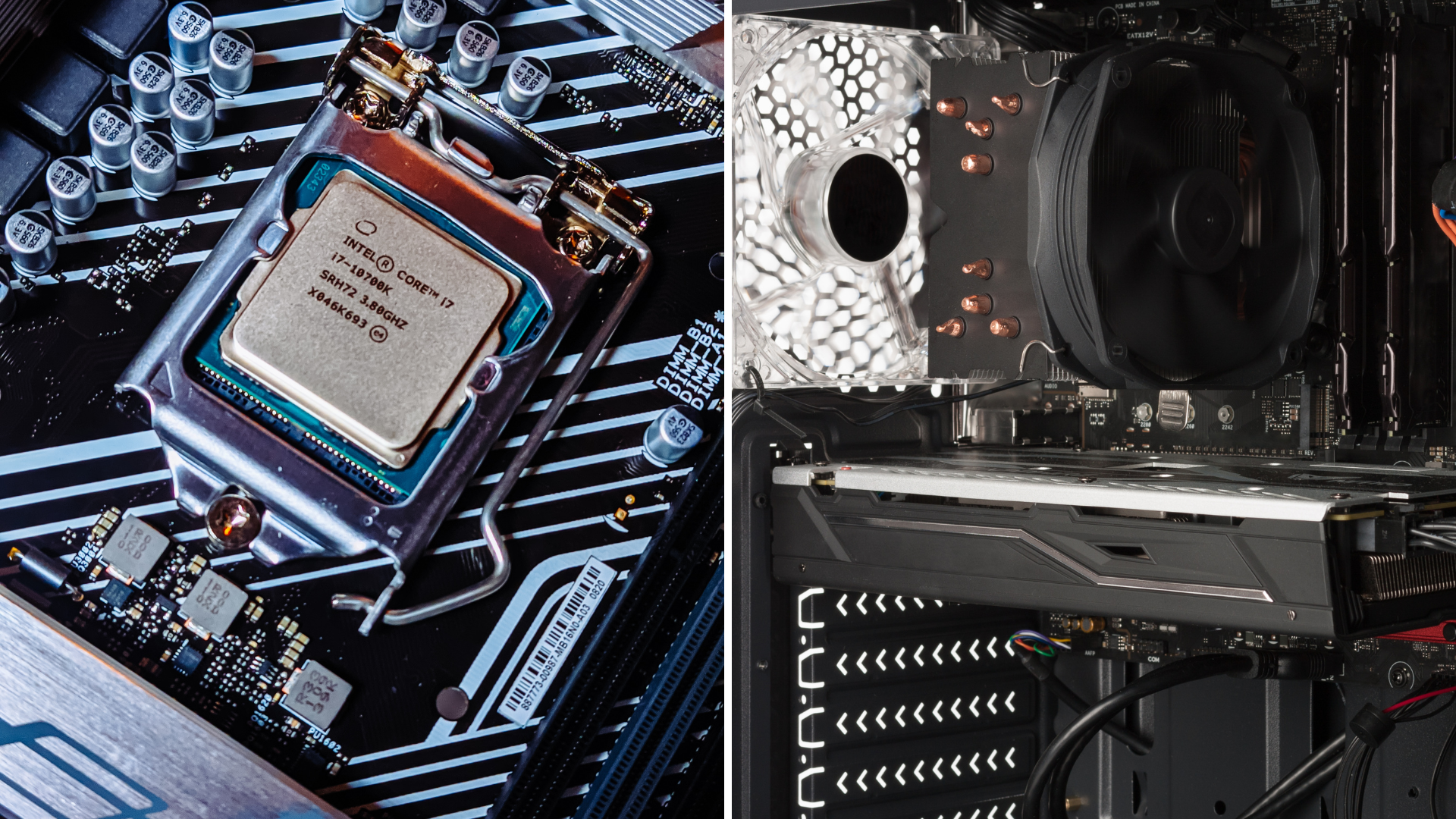
Why is Your CPU Hotter After A GPU Improve?
A quicker graphics card can increase CPU temperatures by warming the case, rising the processor’s workload, or altering the airflow round its cooler.
You set up a greater graphics card, launch the identical recreation, and uncover that the CPU is operating hotter. The processor and its cooler haven’t modified, so it’s tempting accountable disturbed thermal paste or a defective sensor. Each are attainable, however they don’t seem to be the primary explanations to check.
A graphics card improve adjustments the working situations of the entire pc. The GPU might launch extra warmth contained in the enclosure, the CPU might put together extra frames every second, and the brand new card might hinder an airflow path that the previous one left open. Generally all three occur collectively.
One of the best ways to seek out the trigger is to match the previous and new working situations, then change one variable at a time. Do this earlier than shopping for from our CPU cooler suggestions, as a result of a brand new CPU cooler doesn’t essentially handle the supply of the additional warmth.
Three causes the CPU can get hotter
The graphics card is heating the air the CPU cooler makes use of
Most open-air graphics playing cards discharge a lot of their warmth into the case. A tower CPU cooler makes use of that case air, and a top-mounted exhaust radiator does too. If the incoming air will get hotter, the cooler has much less favorable situations even when the CPU itself consumes the identical energy.
Think about changing a card that pulls roughly 150 watts throughout a recreation with one drawing about 280 watts. That hypothetical further 130 watts should depart the enclosure. The exact temperature change is determined by the case, followers, GPU cooler, and room, however it isn’t cheap to anticipate the CPU cooler’s setting to stay unchanged.
The CPU is doing extra work
A GPU that beforehand delivered 80 FPS might have restricted how shortly the processor wanted to organize frames. If the brand new card allows 160 FPS, the sport can demand considerably extra CPU work per second. The CPU’s energy and temperature can rise even when the brand new GPU is not any hotter than the previous one.
The connection is just not completely proportional. Recreation engines divide work otherwise, and background duties, body limits, and scene complexity matter. Nonetheless, evaluating temperature with out evaluating FPS and CPU energy leaves out a serious a part of the reason.
The bodily set up modified airflow
A bigger card can divide the case into extra distinct higher and decrease areas. It might sit nearer to the consumption followers, block entry to a decrease air path, or require cables to cross a gap. A entrance radiator could make the remaining hole even tighter.
Throughout set up, a fan cable may have been disconnected or pushed towards a blade. A help bracket can intervene with a backside fan. These are odd set up points, so examine them earlier than assuming the processor wants recent thermal paste.
Set up a good comparability
Use the identical recreation, scene, decision, graphics settings, and body restrict. Report room temperature close to the case consumption, with out putting the thermometer instantly in a sizzling exhaust stream. Let the sport run till temperatures and fan speeds grow to be moderately secure.
Report CPU temperature, CPU bundle energy, GPU board energy, FPS, and fan RPM. Additionally word whether or not the case panel is put in and whether or not any fan profile modified in the course of the improve. Our temperature monitoring information might help you select one constant logging utility.
Don’t examine the previous card’s frivolously loaded menu with the brand new card’s demanding match. Likewise, shader compilation after a driver or recreation replace can briefly improve CPU work. Look ahead to that course of to complete earlier than treating the end result as regular gameplay.
Check one: restore the previous frame-rate restrict
If the body charge you used earlier than the improve, cap the sport close to that concentrate on. Use a repeatable scene and permit temperatures to settle. Watch whether or not CPU energy decreases together with the CPU temperature.
If each fall considerably, further frame-production work explains at the least a part of the rise. That doesn’t make the improve a mistake. It means the CPU is collaborating extra absolutely within the improved efficiency.
The cap additionally reduces GPU work in lots of conditions, so this check alone can not separate processor workload from case heating. Learn the CPU and GPU energy logs collectively. If each drop, you have got modified two warmth sources. Observe with the airflow check reasonably than declaring one trigger confirmed.
Select a sensible remaining body restrict based mostly in your monitor, recreation, and latency desire. There is no such thing as a profit in operating an uncapped menu at a whole bunch of frames per second if all it provides is noise and warmth.
Check two: examine a CPU-only workload
Run a well-recognized, reasonable CPU workload with the GPU largely idle. Examine with any earlier end result obtained beneath the identical CPU settings. If the CPU cooler behaves usually right here however turns into a lot hotter throughout gaming, case warmth or combined-system airflow turns into a stronger suspect.
If CPU-only temperatures are additionally unexpectedly worse, examine the cooler and fan connections, room temperature, and firmware settings. A coincidental BIOS reset or modified energy profile can alter processor energy independently of the graphics card.
You don’t want to run probably the most aggressive torture check accessible. A workload that already produces speedy overheating or shutdowns offers sufficient cause to cease and examine. A diagnostic comparability ought to scale back uncertainty, not repeatedly set off safety.
Check three: test whether or not the enclosure is the restriction
With the pc powered off, examine filters, consumption openings, fan cables, and the clearance across the new card. Clear a blocked filter and proper an apparent obstruction earlier than testing once more.
A short comparability with the aspect panel eliminated may be helpful in case you can hold fingers, pets, and unfastened objects away from the operating system. A significant enchancment beneath the identical workload suggests the enclosed airflow path deserves consideration. It doesn’t establish the precise fan or panel accountable.
Return the panel afterward. Working completely open adjustments mud publicity, noise, and airflow round different parts. The target is a purposeful closed case, not a benchmark achieved by abandoning the enclosure.
| Check end result | What it suggests | Helpful response |
|---|---|---|
| Outdated FPS cap lowers CPU energy | Extra frames added CPU work | Select a smart body restrict |
| CPU-only conduct stays regular | Mixed warmth or airflow issues | Examine case air flow |
| Panel elimination helps repeatedly | Enclosure airflow is restrictive | Enhance consumption and exhaust paths |
| Excessive temperature at low CPU energy | Potential cooling fault | Test mount, fan, or pump |
Make case followers reply to the part producing warmth
Some techniques management each case fan from CPU temperature. That may work poorly when a GPU-heavy recreation heats the enclosure whereas the processor stays comparatively cool. Case airflow stays low till hotter air finally raises CPU temperature.
In case your controller helps it, contemplate a case-fan technique that responds to each CPU and GPU demand. Our fan-control software program information covers instruments with a number of sensor inputs. Keep away from making use of the identical temperature scale blindly to completely different sensors; create acceptable part curves and mix their requested fan speeds.
For instance, Fan Management’s documentation describes a Combine curve that may choose the utmost request from separate curves. That makes it attainable for both part to name for airflow. Confirm startup conduct and a protected fallback earlier than counting on software program management.
Radiator placement can change which part advantages
A high exhaust radiator typically receives air warmed by the graphics card. A entrance consumption radiator receives cooler exterior air however provides CPU warmth to the air getting into the case. Transferring the radiator might enhance CPU temperature whereas worsening GPU temperature or GPU fan noise.
Decide the entire system beneath your precise recreation workload. Our information to high versus entrance AIO mounting explains the tradeoffs and the bodily checks wanted earlier than transferring something.
Don’t overlook room placement. A pc pushed right into a desk compartment or towards a wall can recycle heat exhaust. Restoring consumption and exhaust house might assist greater than including one other fan inside an already crowded case.
When a cooler improve is justified
A greater CPU cooler is suitable when the processor’s new sustained workload exposes an actual thermal or acoustic restrict after airflow issues have been addressed. It’s much less compelling when the CPU stays inside its meant working conduct and the one change is the next however secure studying.
Use our cooler-upgrade efficiency information to differentiate restored efficiency from a noise enchancment. Each may be worthwhile, however they’re completely different causes to spend cash.
Additionally confirm that the GPU improve’s energy necessities have been addressed. Our information to checking whether or not your PSU can deal with a GPU covers that separate situation. A extra highly effective PSU is not going to instantly cool the processor, and further case followers is not going to right insufficient electrical help.
Steadily Requested Questions
Can a extra environment friendly GPU nonetheless make the CPU hotter?
Sure. Effectivity describes work completed per unit of energy, not essentially decrease complete energy. The brand new card may allow extra frames and subsequently extra CPU work. Examine precise board energy and body charge reasonably than effectivity claims alone.
Ought to I substitute thermal paste after each GPU improve?
No. Altering the graphics card doesn’t mechanically disturb the CPU cooler. Repaste if the cooler was eliminated or proof factors to a contact downside. Pointless remounting introduces one other variable and one other alternative for an set up mistake.
Is hotter exhaust a foul signal?
Not by itself. Heat exhaust means warmth is leaving the case. Part temperatures, secure efficiency, fan noise, and the change out of your baseline let you know greater than how the exhaust feels.
What ought to I repair first?
Right disconnected followers and blocked intakes first. Then examine matched workloads and body limits. Modify case airflow earlier than changing a wholesome CPU cooler, and cease testing if the system exhibits extreme overheating or repeated shutdowns.